
Pharaoh Ant Identification Guide for Shreveport & Bossier City Homes
Pharaoh ants (Monomorium pharaonis) are one of the most frustrating indoor ants to deal with. They’re tiny, light-colored, and easy to overlook at first. Many homeowners in Shreveport, Bossier City, and Northwest Louisiana don’t realize what they’re seeing until the problem spreads from one room to another.
If you’ve noticed small, pale ants in your kitchen, bathroom, or along baseboards, there’s a good chance you’re dealing with pharaoh ants.
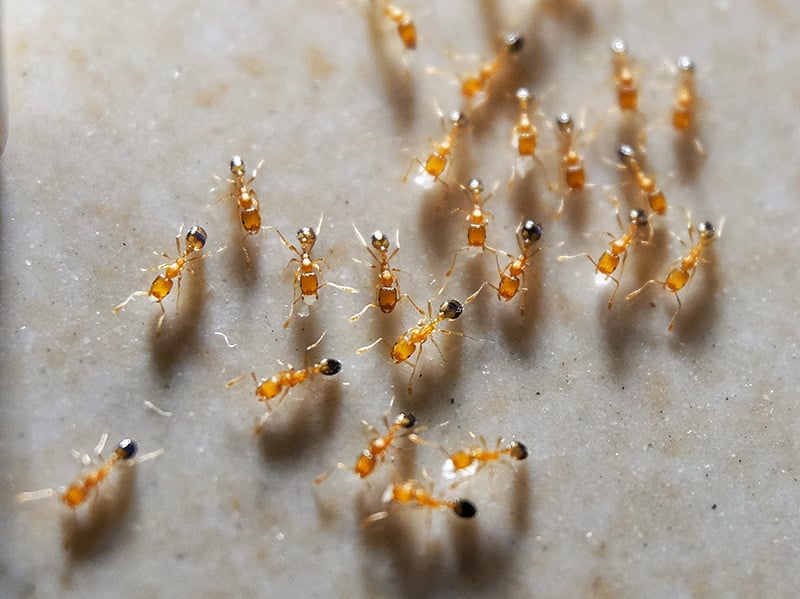
What Do Pharaoh Ants Look Like?
Pharaoh ants are very small—about the size of a grain of sand. That’s one reason they’re so easy to miss.
Here’s what to look for:
- Size: About 1/16 inch long
- Color: Light yellow to tan, with a slightly darker rear end
- Body: Slim with a narrow waist and bent antennae
- Movement: Often seen traveling in thin trails along walls, counters, or floors
Because of their pale color, they can blend into surfaces such as tile, countertops, and light-colored flooring.
Not sure if what you’re seeing is a different type of ant? Take a look at this guide about the types of ants in Shreveport to compare common species found in local homes.
When are Pharaoh ants most active?
Pharaoh ants stay active year-round indoors in Louisiana because of consistent temperatures inside homes. Activity tends to increase in warmer months when colonies expand, and movement becomes more noticeable.
Pharaoh Ants vs. Other Ants
Pharaoh ants are often mistaken for other small ants. That can lead to the wrong approach—and more frustration.
Here’s a quick way to tell them apart:
- Pharaoh ants: Pale yellow, very small, almost translucent
- Argentine ants: Slightly larger and darker brown
- Ghost ants: Similar size, but have a darker head with a pale body
If you’re unsure, check out our guide, Pharaoh Ants vs. Argentine Ants: How to Tell Which You Have, to help narrow it down. If you’re still unsure, a professional inspection can confirm the species and best next steps.
Where You’ll Find Pharaoh Ants in Your Home
Pharaoh ants are indoor ants. In Northwest Louisiana, they thrive in warm, humid environments—which makes your home the perfect place for them.
You’ll most often find them in:
- Kitchens (especially near food or spills)
- Bathrooms (around sinks, tubs, and plumbing)
- Behind baseboards and inside wall voids
- Around appliances that give off heat
They don’t need much space to get inside. Tiny cracks, gaps around pipes, or even electrical outlets can give them access.
If you’re noticing ants in these areas, the next step is looking at the signs of activity.
Signs of Pharaoh Ants in Your Home
Because pharaoh ants are so small, most homeowners don’t notice them right away. Instead, they recognize the signs of activity.
Common signs include:
- Thin ant trails along walls, countertops, or baseboards
- Ants showing up in multiple rooms at the same time
- Ant activity that appears to shift locations over time
- Ants reappearing shortly after being sprayed or cleaned
One of the biggest clues is seeing ants in different areas of your home over time. This usually means there are multiple nesting spots inside the structure.
Why Pharaoh Ants Are So Persistent
Pharaoh ants aren’t just another nuisance ant. They behave differently from most species.
One reason they spread so easily is that their colonies have multiple queens. This allows parts of the colony to break off and form new nests nearby—a process known as budding. Because of this, activity can quickly spread to different areas of a home.
Instead of sticking to one nest, they form multiple colonies throughout a structure. When disturbed, they can split off and create even more nests.
That’s why you might see them in one area one week, then another area the next.
If you want a better understanding of why they’re so difficult to control, take a look at why pharaoh ants are hard to eliminate.
Why Proper Identification Matters
With pharaoh ants, using the wrong approach can actually make the problem worse.
For example:
- Spraying visible ants can cause colonies to split
- Disturbing their trails can push them into new areas of the home
- That’s why it’s important to identify them correctly before trying to treat them.
If you’re deciding what steps to take, this breakdown of DIY vs professional pest control explains what to expect.
Why Pharaoh Ants Are a Problem for Businesses
Pharaoh ants can be especially difficult for businesses in Shreveport-Bossier. Because they are so small and nest inside walls, they can spread through a building without being noticed right away.
They’re often found in:
- Restaurants and kitchens
- Offices and break rooms
- Healthcare and care facilities
These ants travel through walls, plumbing areas, and shared spaces, which makes them hard to contain once they’re inside.
In environments where cleanliness matters, pharaoh ants can become a bigger concern since they move between food, trash, and other surfaces.
Ongoing pest control is important in commercial settings, since treating one area doesn’t always eliminate the full infestation.
Learn more about Anti-Pest’s commercial pest control services.
What to Do If You See Pharaoh Ants
If you think you’ve identified pharaoh ants in your home, it’s important to act carefully.
- Avoid spraying over-the-counter insecticides directly on trails
- Don’t disturb the areas where you’re seeing activity
- Keep surfaces clean and reduce food sources
Pharaoh ants spread easily when disturbed. Using the wrong approach can cause them to break off and form new colonies in different parts of your home.
Because of this, the most effective solution is a targeted treatment that addresses the entire colony—not just the ants you see.
At Anti-Pest, we help homeowners in Shreveport, Bossier City, and across Northwest Louisiana eliminate pharaoh ants and keep them from coming back with ongoing pest control services designed to protect your home year-round.
If you want help with existing ant activity—or to prevent future infestations—our residential pest control services are a great fit. Contact our local team to schedule your inspection.
Frequently Asked Questions About Pharaoh Ants
What do pharaoh ants eat?
Nectar, honeydew, and fruit are Pharaoh ants' favorite food sources outdoors. When these ants enter structures, they eat grease and oil splattered on the sides of ovens, sugar granules on shelves, peanut butter, and more. They also eat the insects that enter your home in search of available food resources.
Are pharaoh ants dangerous?
They don’t sting or bite like fire ants, but they can be a concern indoors. They’re known for spreading bacteria because they travel through kitchens, trash areas, and other surfaces.
Do pharaoh ants swarm?
Pharaoh ants don’t swarm to mate like termites or other ant species. Instead, they spread by splitting into new colonies within walls and other hidden areas, which is why they can appear in multiple parts of your home.
Do pharaoh ants release pheromones when killed?
No, pharaoh ants don’t release pheromones that attract others when they’re killed. However, disturbing them—especially with sprays—can cause colonies to spread, making it seem like more ants are showing up.

Testimonials


Our Services


News, Blogs, & Articles
Anti-Pest Blog